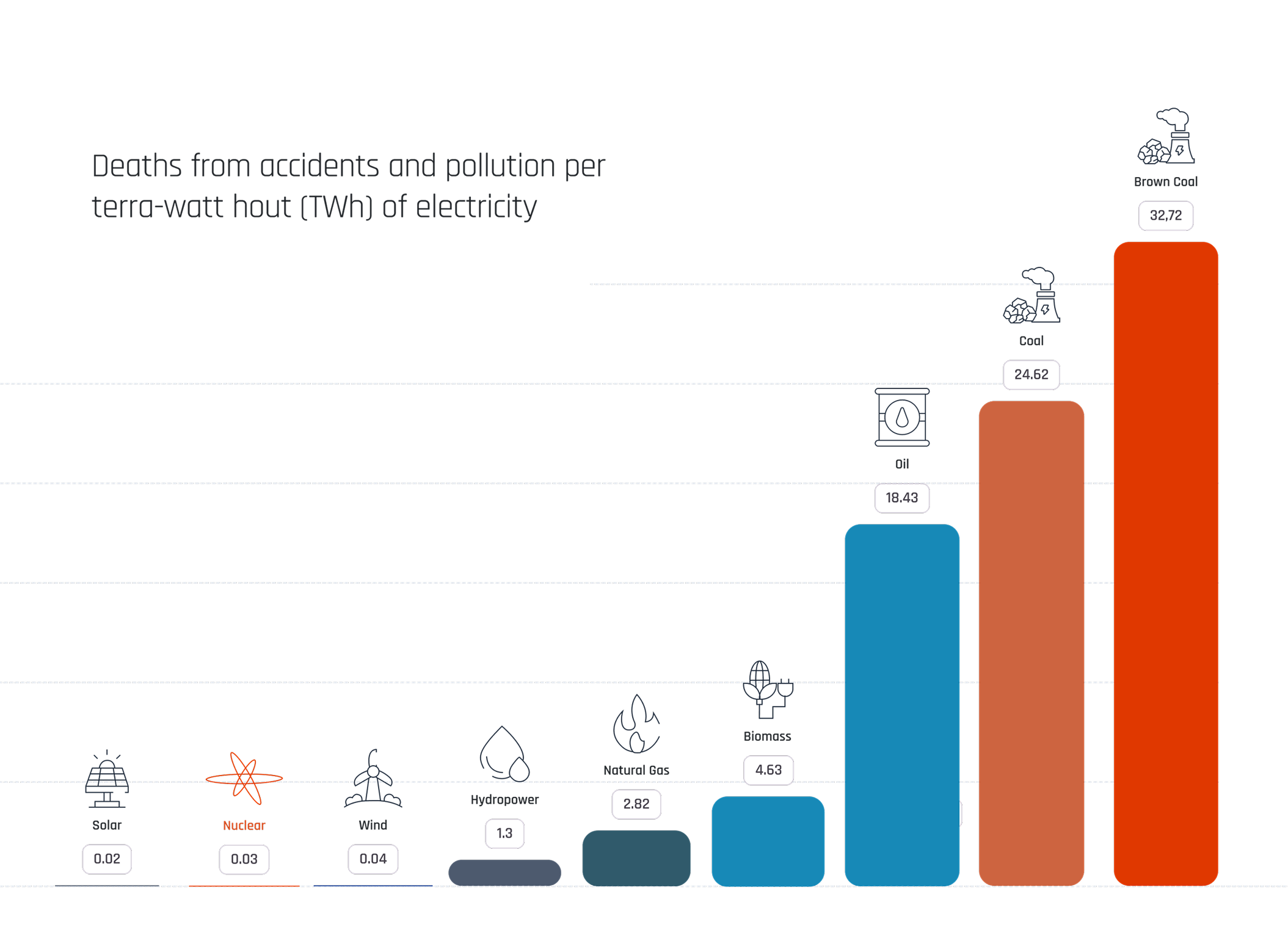
Data source: Markandya $ Wilkinson (2007); Sovacool et al. (2016); UNSCEAR (2018 & ;2008) OurWorldinData.org/energy CC BY
Most reactors use only about 5 percent of the energy in nuclear fuel. That means the remaining 95 percent is still there, waiting to be tapped. Not tapping it is like taking one bite out of an apple and tossing the rest in the trash.
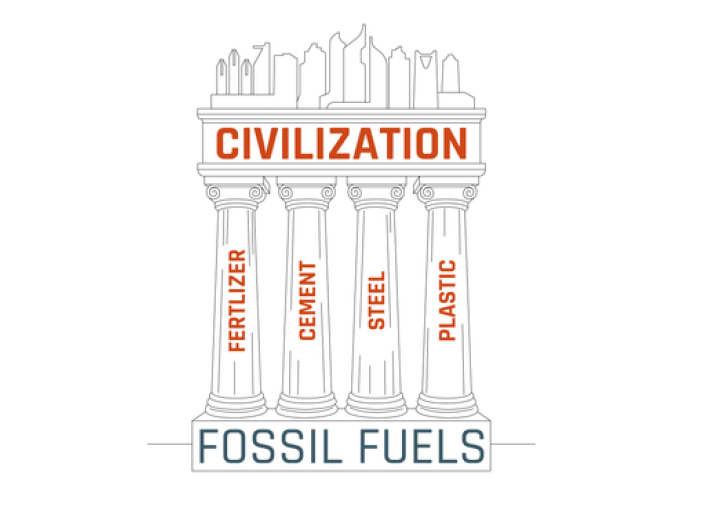
Currently, there are no commercially available and readily deployable mass scale alternatives to displace these processes. Modern society can’t exist without 4 ingredients
1. Ammonia (fertilizer)
2. Cement (buildings, roads, dams, runways)
3. Steel (skyscrapers, bridges, cars, scalpels)
4. Plastics (computers, health care products)
They all require fossil fuels.

Energy infrastructure is the backbone of modern civilization. All human progress depends on reliable, affordable energy. But not all sources of energy are created equal. The history of human progress is a story of harnessing increasingly dense sources of energy: from wood, to coal, to natural gas, and ultimately to nuclear—the densest source of energy there is.
Only dense energy sources can fuel innovation in the age of AI and robotics, and nuclear energy is the densest source of all. Nuclear fission is 50 million times more powerful than hydrocarbons like coal, oil, and gas. A quantity of uranium fuel the size of a golf ball stores enough energy to power your entire lifetime.
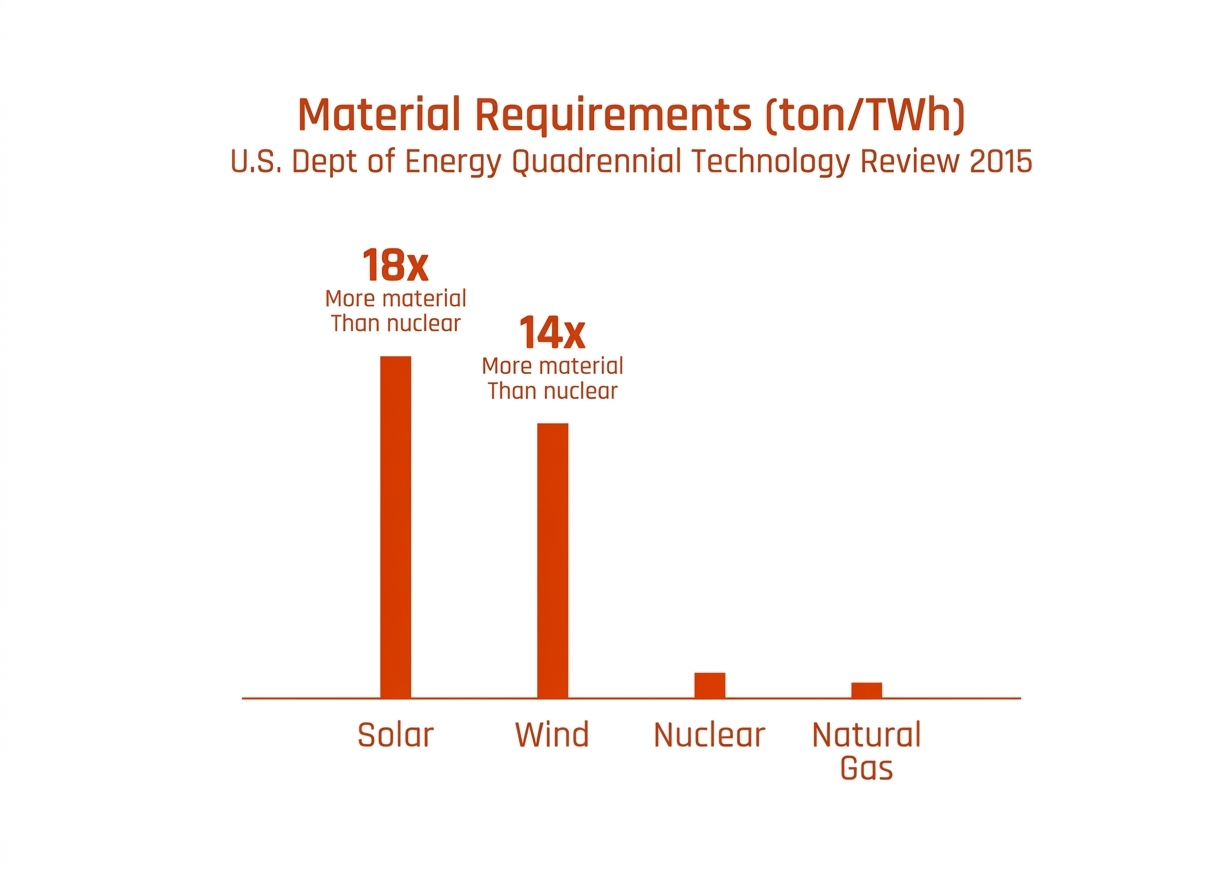
It has the smallest environmental footprint of any energy source—less material, less land use, less waste.
90% of used nuclear fuel can be turned into 24/7 clean energy.
It’s proven to be the safest way of producing 24/7 clean energy.
There’s enough to power human civilization for 4 billion years.
Monthly insights on how better energy unlocks prosperity
© 2026 Copyright Brian Gitt. All rights reserved.
Monthly insights on how better energy unlocks prosperity