Nuclear in My Backyard
Nuclear in My Backyard
Nuclear in My Backyard
Feb 22, 2026
Feb 22, 2026
Feb 22, 2026
Having spent decades working in the energy industry, I’ve met with hundreds of residents in different cities and towns across the country to talk about energy infrastructure and new builds. Some conversations have been positive and thoughtful, but often people have been wary or hostile.
Recently, however, conversations have been completely different. I had been bracing for backlash, but what I’ve been met with is excitement. Policymakers and community leaders have been reaching out, wanting Oklo to build in their backyards. Communities want the economic development and jobs that such a project can bring.
In January 2026, Oklo closed a landmark deal with Meta to build, operate and maintain a new generation of advanced nuclear plants, beginning with a facility in Pike County, Ohio, that can scale to 1.2 gigawatts, equivalent to powering about one million homes. It will be built on 200 acres of land in southern Ohio previously owned by the Department of Energy. The multiyear project will create thousands of long-term jobs, pump tens of millions of dollars into the local economy and pave the way for safe, clean and reliable 24/7 energy.
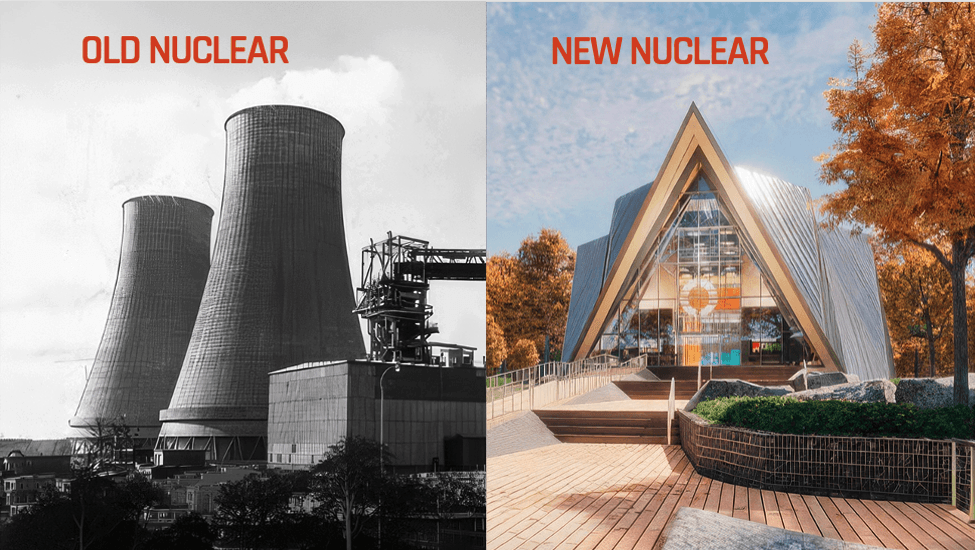
When people think of nuclear power, most still picture the old 1,000-megawatt plants—industrial wonders with massive concrete towers and billowing clouds of steam. But times change, and technologies evolve: Today’s nuclear plants differ from those of yesterday. Oklo’s 75-megawatt powerhouses look more like Apple Stores than industrial complexes. They fit on just a few acres, blend naturally into their surroundings and provide clean, quiet, reliable power 24/7.
Two years ago, the nuclear renaissance didn’t look as bright. But because AI is driving explosive growth in computer demand, it’s clear that wind and solar alone can’t power the data-hungry future. The only clean energy source that’s reliable enough to power AI is nuclear.
The idea that AI data centers are the factory of the future isn’t just a metaphor. Like steel mills, cement factories and chemical plants, they run around the clock and consume enormous amounts of energy. In the heavy-industry era these demands led companies to build onsite power plants to ensure reliability and control costs. AI factories share the same DNA: massive, continuous power needs with virtually zero tolerance for interruption.
This growth isn’t just about generative AI. Every business in the U.S. is shifting from general-purpose computing to accelerated computing—the kind that powers instant Google searches and online purchasing. As AI and robotics spread across manufacturing, logistics, supply chains and customer service, every Fortune 500 company will need its own AI factory to stay competitive. We’re still in the first leg of a multi-decade race to build out AI and the power infrastructure that will drive it. In that race, whoever has the best energy wins.
Throughout history, new power plants have sparked entire economic booms. In 1936, Hoover Dam lit up the desert and turned a dusty railroad stop into Las Vegas. A few years later, Grand Coulee Dam in Washington launched Boeing and helped build the bombers that won World War II. In 1986, Palo Verde’s nuclear plant rose from the Arizona desert and fueled Phoenix’s transformation into one of the fastest-growing cities in the country.
Time and again, the development of new power plants transformed land, opportunity and lives. This time, the countries, companies and communities that embrace AI factories powered by advanced nuclear plants will lead the race for AI, for jobs and for prosperity.
Nuclear is the most powerful and efficient energy source ever harnessed. A piece of uranium fuel the size of a golf ball holds enough energy to power a person’s entire life. And there’s enough uranium on Earth to power civilization for billions of years.
Nuclear is also the safest, cleanest, and most reliable source of 24/7 energy. It produces zero emissions while operating and fewer emissions over its lifetime than wind or solar. It also delivers far more energy for every unit invested; it uses less land, less material and produces a fraction of the waste.
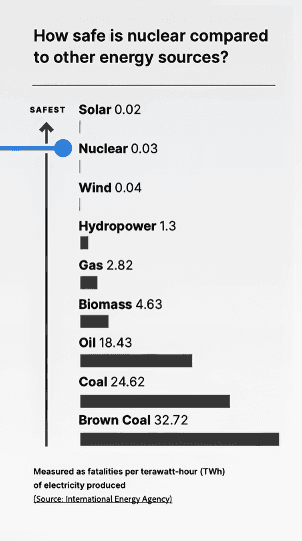
Most importantly, nuclear has the safest operating record of any energy source except solar. And advanced nuclear plants take safety to an entirely new level. Old plants, such as Fukushima and Three Mile Island, used backup power and human operators to intervene in an emergency. But new advanced nuclear plants like Oklo’s don’t need backup power, complex systems or human intervention. They cool themselves automatically using such natural forces as gravity and air flow.
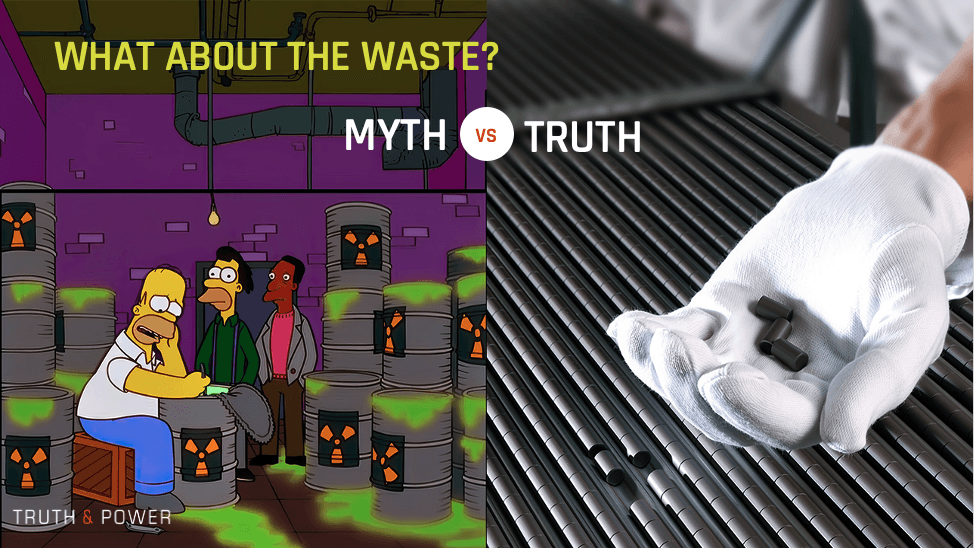
Advanced nuclear plants are also extremely efficient: They use less than a third of the fuel of old plants, and better yet, they can recycle nuclear waste. Nuclear waste is used fuel—small uranium pellets. Used pellets retain 95% of their energy potential, so Oklo’s advanced nuclear plants recycle them. If the U.S. recycled all of its used fuel, it could power the country for the next 100 years. That’s equivalent to about 1.3 trillion barrels of oil—85% of the world’s proven oil reserves.
Communities across the country are realizing that advanced nuclear projects bring what every community needs most: good jobs, new tax revenue and lasting investment. Competition to attract these projects has already begun. Towns in Texas, Tennessee, Idaho, Wyoming, Utah and Virginia are moving quickly to accelerate deployment. They’re likely to win the race to prosperity.
When I joined Oklo three years ago, I thought it would take years for communities to embrace advanced nuclear projects. I was wrong. The change is happening now. Meta’s deal with Oklo is just a part of something much bigger—a new chapter, not just for nuclear energy but for every community that still believes in building.
For decades, the refrain in local communities was, “Not in my backyard.” Now, the voices are growing louder, prouder and more hopeful: “Build it here.”
Having spent decades working in the energy industry, I’ve met with hundreds of residents in different cities and towns across the country to talk about energy infrastructure and new builds. Some conversations have been positive and thoughtful, but often people have been wary or hostile.
Recently, however, conversations have been completely different. I had been bracing for backlash, but what I’ve been met with is excitement. Policymakers and community leaders have been reaching out, wanting Oklo to build in their backyards. Communities want the economic development and jobs that such a project can bring.
In January 2026, Oklo closed a landmark deal with Meta to build, operate and maintain a new generation of advanced nuclear plants, beginning with a facility in Pike County, Ohio, that can scale to 1.2 gigawatts, equivalent to powering about one million homes. It will be built on 200 acres of land in southern Ohio previously owned by the Department of Energy. The multiyear project will create thousands of long-term jobs, pump tens of millions of dollars into the local economy and pave the way for safe, clean and reliable 24/7 energy.
When people think of nuclear power, most still picture the old 1,000-megawatt plants—industrial wonders with massive concrete towers and billowing clouds of steam. But times change, and technologies evolve: Today’s nuclear plants differ from those of yesterday. Oklo’s 75-megawatt powerhouses look more like Apple Stores than industrial complexes. They fit on just a few acres, blend naturally into their surroundings and provide clean, quiet, reliable power 24/7.
Two years ago, the nuclear renaissance didn’t look as bright. But because AI is driving explosive growth in computer demand, it’s clear that wind and solar alone can’t power the data-hungry future. The only clean energy source that’s reliable enough to power AI is nuclear.
The idea that AI data centers are the factory of the future isn’t just a metaphor. Like steel mills, cement factories and chemical plants, they run around the clock and consume enormous amounts of energy. In the heavy-industry era these demands led companies to build onsite power plants to ensure reliability and control costs. AI factories share the same DNA: massive, continuous power needs with virtually zero tolerance for interruption.
This growth isn’t just about generative AI. Every business in the U.S. is shifting from general-purpose computing to accelerated computing—the kind that powers instant Google searches and online purchasing. As AI and robotics spread across manufacturing, logistics, supply chains and customer service, every Fortune 500 company will need its own AI factory to stay competitive. We’re still in the first leg of a multi-decade race to build out AI and the power infrastructure that will drive it. In that race, whoever has the best energy wins.
Throughout history, new power plants have sparked entire economic booms. In 1936, Hoover Dam lit up the desert and turned a dusty railroad stop into Las Vegas. A few years later, Grand Coulee Dam in Washington launched Boeing and helped build the bombers that won World War II. In 1986, Palo Verde’s nuclear plant rose from the Arizona desert and fueled Phoenix’s transformation into one of the fastest-growing cities in the country.
Time and again, the development of new power plants transformed land, opportunity and lives. This time, the countries, companies and communities that embrace AI factories powered by advanced nuclear plants will lead the race for AI, for jobs and for prosperity.
Nuclear is the most powerful and efficient energy source ever harnessed. A piece of uranium fuel the size of a golf ball holds enough energy to power a person’s entire life. And there’s enough uranium on Earth to power civilization for billions of years.
Nuclear is also the safest, cleanest, and most reliable source of 24/7 energy. It produces zero emissions while operating and fewer emissions over its lifetime than wind or solar. It also delivers far more energy for every unit invested; it uses less land, less material and produces a fraction of the waste.
Most importantly, nuclear has the safest operating record of any energy source except solar. And advanced nuclear plants take safety to an entirely new level. Old plants, such as Fukushima and Three Mile Island, used backup power and human operators to intervene in an emergency. But new advanced nuclear plants like Oklo’s don’t need backup power, complex systems or human intervention. They cool themselves automatically using such natural forces as gravity and air flow.
Advanced nuclear plants are also extremely efficient: They use less than a third of the fuel of old plants, and better yet, they can recycle nuclear waste. Nuclear waste is used fuel—small uranium pellets. Used pellets retain 95% of their energy potential, so Oklo’s advanced nuclear plants recycle them. If the U.S. recycled all of its used fuel, it could power the country for the next 100 years. That’s equivalent to about 1.3 trillion barrels of oil—85% of the world’s proven oil reserves.
Communities across the country are realizing that advanced nuclear projects bring what every community needs most: good jobs, new tax revenue and lasting investment. Competition to attract these projects has already begun. Towns in Texas, Tennessee, Idaho, Wyoming, Utah and Virginia are moving quickly to accelerate deployment. They’re likely to win the race to prosperity.
When I joined Oklo three years ago, I thought it would take years for communities to embrace advanced nuclear projects. I was wrong. The change is happening now. Meta’s deal with Oklo is just a part of something much bigger—a new chapter, not just for nuclear energy but for every community that still believes in building.
For decades, the refrain in local communities was, “Not in my backyard.” Now, the voices are growing louder, prouder and more hopeful: “Build it here.”
Having spent decades working in the energy industry, I’ve met with hundreds of residents in different cities and towns across the country to talk about energy infrastructure and new builds. Some conversations have been positive and thoughtful, but often people have been wary or hostile.
Recently, however, conversations have been completely different. I had been bracing for backlash, but what I’ve been met with is excitement. Policymakers and community leaders have been reaching out, wanting Oklo to build in their backyards. Communities want the economic development and jobs that such a project can bring.
In January 2026, Oklo closed a landmark deal with Meta to build, operate and maintain a new generation of advanced nuclear plants, beginning with a facility in Pike County, Ohio, that can scale to 1.2 gigawatts, equivalent to powering about one million homes. It will be built on 200 acres of land in southern Ohio previously owned by the Department of Energy. The multiyear project will create thousands of long-term jobs, pump tens of millions of dollars into the local economy and pave the way for safe, clean and reliable 24/7 energy.
When people think of nuclear power, most still picture the old 1,000-megawatt plants—industrial wonders with massive concrete towers and billowing clouds of steam. But times change, and technologies evolve: Today’s nuclear plants differ from those of yesterday. Oklo’s 75-megawatt powerhouses look more like Apple Stores than industrial complexes. They fit on just a few acres, blend naturally into their surroundings and provide clean, quiet, reliable power 24/7.
Two years ago, the nuclear renaissance didn’t look as bright. But because AI is driving explosive growth in computer demand, it’s clear that wind and solar alone can’t power the data-hungry future. The only clean energy source that’s reliable enough to power AI is nuclear.
The idea that AI data centers are the factory of the future isn’t just a metaphor. Like steel mills, cement factories and chemical plants, they run around the clock and consume enormous amounts of energy. In the heavy-industry era these demands led companies to build onsite power plants to ensure reliability and control costs. AI factories share the same DNA: massive, continuous power needs with virtually zero tolerance for interruption.
This growth isn’t just about generative AI. Every business in the U.S. is shifting from general-purpose computing to accelerated computing—the kind that powers instant Google searches and online purchasing. As AI and robotics spread across manufacturing, logistics, supply chains and customer service, every Fortune 500 company will need its own AI factory to stay competitive. We’re still in the first leg of a multi-decade race to build out AI and the power infrastructure that will drive it. In that race, whoever has the best energy wins.
Throughout history, new power plants have sparked entire economic booms. In 1936, Hoover Dam lit up the desert and turned a dusty railroad stop into Las Vegas. A few years later, Grand Coulee Dam in Washington launched Boeing and helped build the bombers that won World War II. In 1986, Palo Verde’s nuclear plant rose from the Arizona desert and fueled Phoenix’s transformation into one of the fastest-growing cities in the country.
Time and again, the development of new power plants transformed land, opportunity and lives. This time, the countries, companies and communities that embrace AI factories powered by advanced nuclear plants will lead the race for AI, for jobs and for prosperity.
Nuclear is the most powerful and efficient energy source ever harnessed. A piece of uranium fuel the size of a golf ball holds enough energy to power a person’s entire life. And there’s enough uranium on Earth to power civilization for billions of years.
Nuclear is also the safest, cleanest, and most reliable source of 24/7 energy. It produces zero emissions while operating and fewer emissions over its lifetime than wind or solar. It also delivers far more energy for every unit invested; it uses less land, less material and produces a fraction of the waste.
Most importantly, nuclear has the safest operating record of any energy source except solar. And advanced nuclear plants take safety to an entirely new level. Old plants, such as Fukushima and Three Mile Island, used backup power and human operators to intervene in an emergency. But new advanced nuclear plants like Oklo’s don’t need backup power, complex systems or human intervention. They cool themselves automatically using such natural forces as gravity and air flow.
Advanced nuclear plants are also extremely efficient: They use less than a third of the fuel of old plants, and better yet, they can recycle nuclear waste. Nuclear waste is used fuel—small uranium pellets. Used pellets retain 95% of their energy potential, so Oklo’s advanced nuclear plants recycle them. If the U.S. recycled all of its used fuel, it could power the country for the next 100 years. That’s equivalent to about 1.3 trillion barrels of oil—85% of the world’s proven oil reserves.
Communities across the country are realizing that advanced nuclear projects bring what every community needs most: good jobs, new tax revenue and lasting investment. Competition to attract these projects has already begun. Towns in Texas, Tennessee, Idaho, Wyoming, Utah and Virginia are moving quickly to accelerate deployment. They’re likely to win the race to prosperity.
When I joined Oklo three years ago, I thought it would take years for communities to embrace advanced nuclear projects. I was wrong. The change is happening now. Meta’s deal with Oklo is just a part of something much bigger—a new chapter, not just for nuclear energy but for every community that still believes in building.
For decades, the refrain in local communities was, “Not in my backyard.” Now, the voices are growing louder, prouder and more hopeful: “Build it here.”
Recent Articles

Sign up to
Truth & Power
Monthly insights on how better energy unlocks prosperity
Sign up to
Truth & Power
Monthly insights on how better energy unlocks prosperity
Sign up to
Truth & Power
Monthly insights on how better energy unlocks prosperity

© 2025 Copyright Brian Gitt. All rights reserved.
© 2025 Copyright Brian Gitt. All rights reserved.
© 2025 Copyright Brian Gitt. All rights reserved.