
I’d just finished my presentation on nuclear energy. “Let’s open it up for questions,” I said and stepped away from the podium. I knew what the first question was going to be. It’s what the first question always is. It’s also my favorite question to answer. An older man in the audience blurted out, “What about the waste?”
Excellent!
This was my chance to tell people why nuclear waste isn’t the big scary problem the media has made it out to be, that the waste can be recycled, and that recycled waste is a massive untapped energy resource – a goldmine – to give to our children and grandchildren.
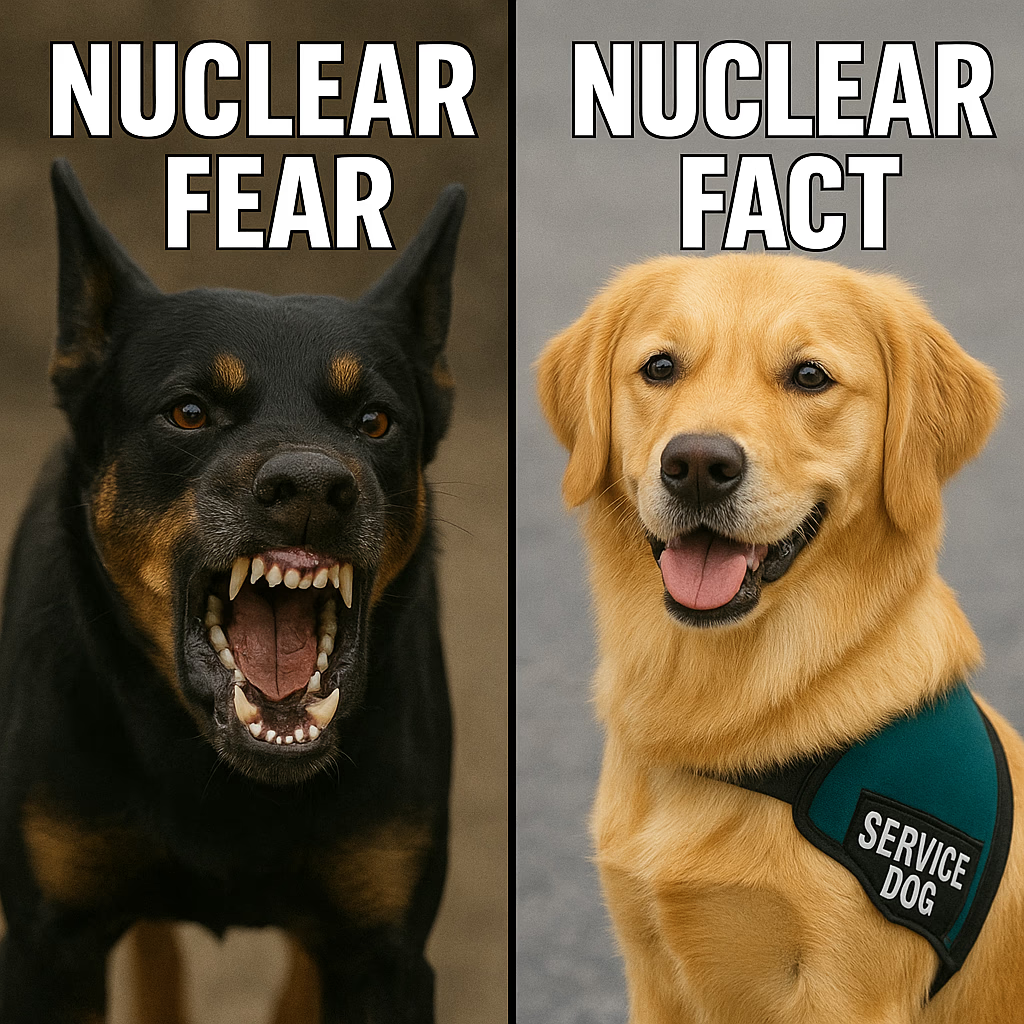
“Nuclear waste”: what comes to mind when I say that? A lot of people picture green goo like on The Simpsons, or leaky steel drums seeping glowing liquid into groundwater, mutating fish, and poisoning communities. The image is so silly it’s hilarious. That’s why The Simpsons has leaned on it as a running joke for more than thirty-five years.
But the image is also completely wrong.
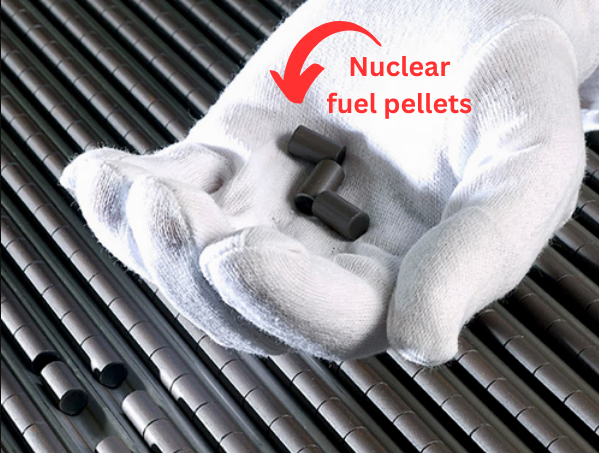
Real nuclear waste is just used nuclear fuel – not glowing liquid – but solid ceramic pellets, each about the size of a Lego block.
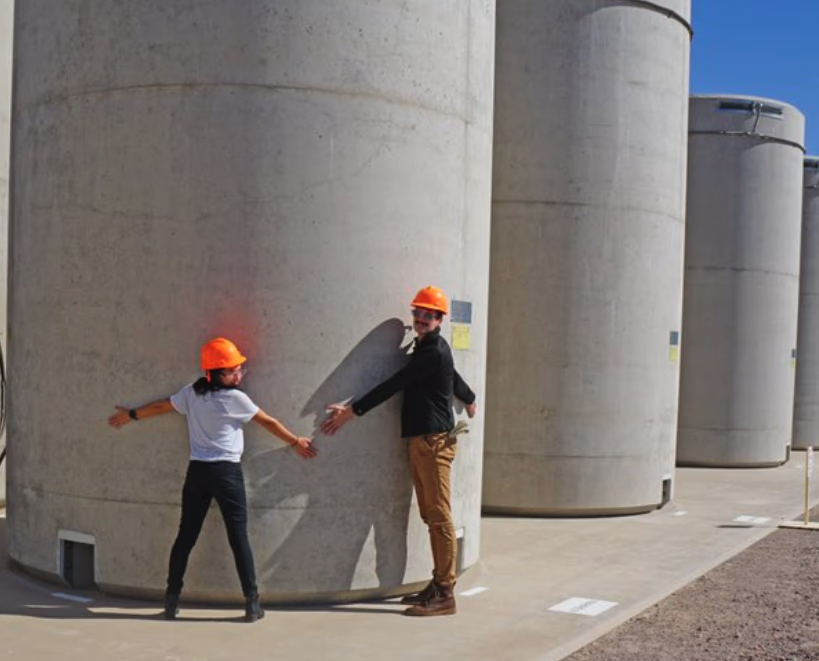
Every bit of nuclear material is carefully tracked, safely stored, and securely sealed in concrete-and-steel containers. Yes, it’s radioactive – that’s why we take steps to store it responsibly. Similarly, gasoline is explosive – that’s why we take steps to store it safely. The same goes for the bleach we store under the sink, and the carving knife we use on Thanksgiving. We handle these things responsibly, store them safely, and keep them out of children’s reach. It’s not that they can’t harm us—they can. It’s that we know how to handle them so they won’t.
The same is true of used nuclear fuel. Like any powerful material, it deserves respect and a bit of common sense to keep everyone safe. But just as you can hold a gas can or bottle of bleach, you can stand next to nuclear storage containers – even touch them – without getting any harmful radiation.
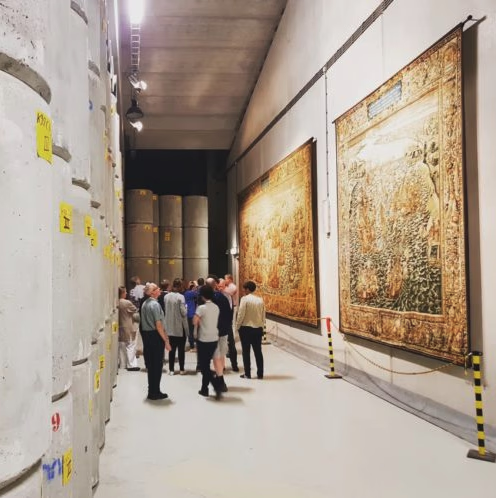
People in other countries already understand this idea. In the Netherlands, for example, a nuclear waste facility also serves as a public museum and art space. Visitors can see exactly how the material is stored – no secrecy, no stigma, just transparency and confidence.
Here’s the thing that really surprises a lot of people:
Nuclear waste can be recycled. Used nuclear fuel still holds 95 percent of its energy. Most reactors use only about 5 percent of the energy in nuclear fuel. That means the remaining 95 percent is still there, waiting to be tapped. Not tapping it is like taking one bite out of an apple and tossing the rest in the trash.
Nuclear recycling is a huge economic opportunity. It’s already common practice in other countries like France. If the US recycled all of its used fuel, we could power the entire country for the next 100 years. Even if we never mined another milligram of uranium, we could still recycle the used nuclear fuel we have to supply clean, reliable energy to the entire US – a nation of 340 million people – for the next century. By the way, the amount of used nuclear fuel we’re talking about is relatively small. Uranium is so energy-dense that in 70 years of commercial nuclear operation, all the used fuel we’ve accumulated fits into a space no bigger than a Walmart Supercenter.
Traditional reactors weren’t built to run on recycled fuel. But advanced reactors are. Oklo, an advanced nuclear energy company, is building the first privately-funded nuclear recycling facility in Oak Ridge, Tennessee. It’s a $1.68 billion investment that will create a secure domestic fuel supply for advanced reactors. Those reactors promise to deliver abundant clean energy for generations.
Let me talk about some common worries that people express when I talk about nuclear recycling. One concerns nuclear proliferation – the worry that recycling could make it easier for bad guys to get a hold of nuclear material to make weapons. These worries have largely to do with plutonium, the material used in nuclear weapons.
Traditional recycling methods separate out plutonium from other nuclear materials. But advanced recycling methods – like the kind Oklo is building in Tennessee – don’t work that way. They keep plutonium mixed with other heavy elements – something that makes it unusable for weapons but ideal for fuel.
Another worry is that nuclear recycling is too expensive. But that’s false. Advanced reactors can cut fuel costs by as much as 80 percent if they use recycled fuel instead of new fuel. Nuclear fuel recycling isn’t just smart from an environmental standpoint; it’s a major economic advantage that can dramatically lower the cost of the power produced.
Nuclear is the most powerful and efficient energy source we’ve ever harnessed. It’s also the only energy source that keeps all of its waste out of the environment. By turning that waste into 24/7 clean energy, we can provide abundant, reliable power for our children and grandchildren.
I won over the older gentleman in the audience when I explained the facts of nuclear recycling to him. The next time someone says, “What about the waste?” you know what to tell them: Recycle it!
